Carl Rogers concept of Unconditional Positive Regard: A Cornerstone of Coaching Success
In coaching, creating a supportive and nurturing environment is crucial for empowering clients to achieve their goals and unlock their full potential. One powerful concept that serves as a cornerstone for coaching success is Carl Rogers' concept of unconditional positive regard. By embracing this approach, coaches can cultivate a space of acceptance, empathy, and non-judgment, fostering trust and facilitating transformative growth. In this article, we explore the significance of unconditional positive regard as a fundamental element in coaching, and its benefits for clients.
What is unconditional positive regard?
Unconditional positive regard (UPR), first described by Carl Rogers, means relating to someone with consistent respect and acceptance, even when their choices, emotions, or behaviour are messy. In coaching, it looks like this:
you take the client seriously, even when you disagree
you stay curious instead of judgemental
you separate identity (“who you are”) from behaviour (“what you did”)
you keep the relationship stable while the work gets challenging
If you want the shortest definition: UPR is the stance that makes honest reflection possible.
Why unconditional positive regard matters in coaching
Most senior people are surrounded by evaluation: performance reviews, stakeholder judgement, board scrutiny, political maneuvering. That creates impression-management and defensive thinking.
UPR reduces that threat response by signaling: you can tell the truth here. When the perceived social risk drops, clients stop performing and start reflecting. That is where behaviour change becomes possible.
Understanding Unconditional Positive Regard:
Unconditional positive regard, as conceptualized by Carl Rogers (1961), refers to the unwavering acceptance and support that coaches provide to their clients. It involves valuing and respecting clients for who they are, without judgment or conditions. Coaches offer empathetic understanding, genuine care, and a non-directive approach that allows clients to explore their thoughts, feelings, and experiences freely without fear of hindrance. This approach is based on the idea that people can better understand themselves and resolve their problems in an atmosphere of acceptance and empathy.
Implementing UPR involves listening with empathy, withholding criticism, and offering support, enabling clients to explore their thoughts and feelings freely. This supportive environment helps clients to confront difficult challenges of their life and encourages them to move towards self-improvement.
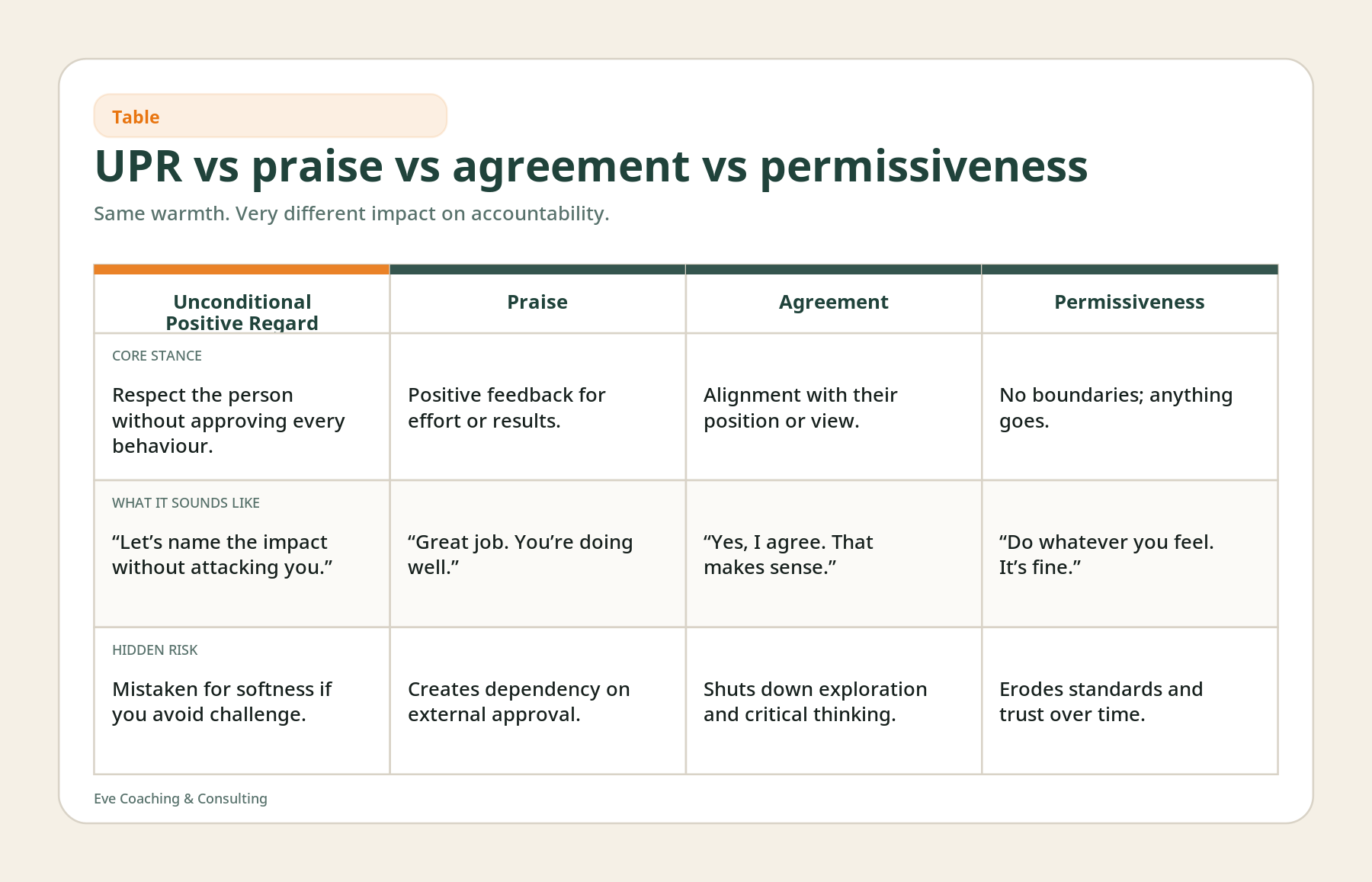
A quick comparison of four similar-sounding stances with very different outcomes in coaching.
If you want a sharper version of challenge without defensiveness, see assessment-led coaching using Hogan.
Benefits of Unconditional Positive Regard in Coaching:
Establishing Trust and Rapport: Unconditional positive regard creates a safe and non-threatening environment where clients feel comfortable being vulnerable. This trust and rapport lay the foundation for open and honest conversations, enabling clients to delve deep into their challenges and aspirations.
Encouraging Self-Exploration: By embracing unconditional positive regard, coaches foster self-exploration and self-reflection in clients. The absence of judgment and criticism allows clients to examine their thoughts, emotions, and behaviors with curiosity and acceptance, leading to greater self-awareness and personal insights.
Enhancing Self-Esteem and Confidence: When clients experience unconditional positive regard, they feel valued and accepted for who they are. This acceptance bolsters their self-esteem, confidence, and belief in their abilities, empowering them to take risks and embrace personal growth.
Facilitating Emotional Well-being: Unconditional positive regard helps clients navigate and process their emotions in a supportive environment. Clients feel understood and validated, which can alleviate stress, anxiety, and emotional burdens, leading to improved emotional well-being.
Unconditional positive regard stands as a cornerstone of coaching success, nurturing trust, self-exploration, and personal growth. By embracing this approach, coaches create a supportive and non-judgmental space where clients can freely explore their challenges, aspirations, and inner selves. Through active listening, empathy, and a non-directive approach, coaches demonstrate acceptance and respect for clients' experiences. As coaches incorporate unconditional positive regard into their practice, they empower clients to embrace their potential, foster emotional well-being, and achieve transformative outcomes. By fostering a coaching relationship grounded in unconditional positive regard, coaches create a powerful catalyst for clients to thrive and succeed on their unique journeys of personal and professional development
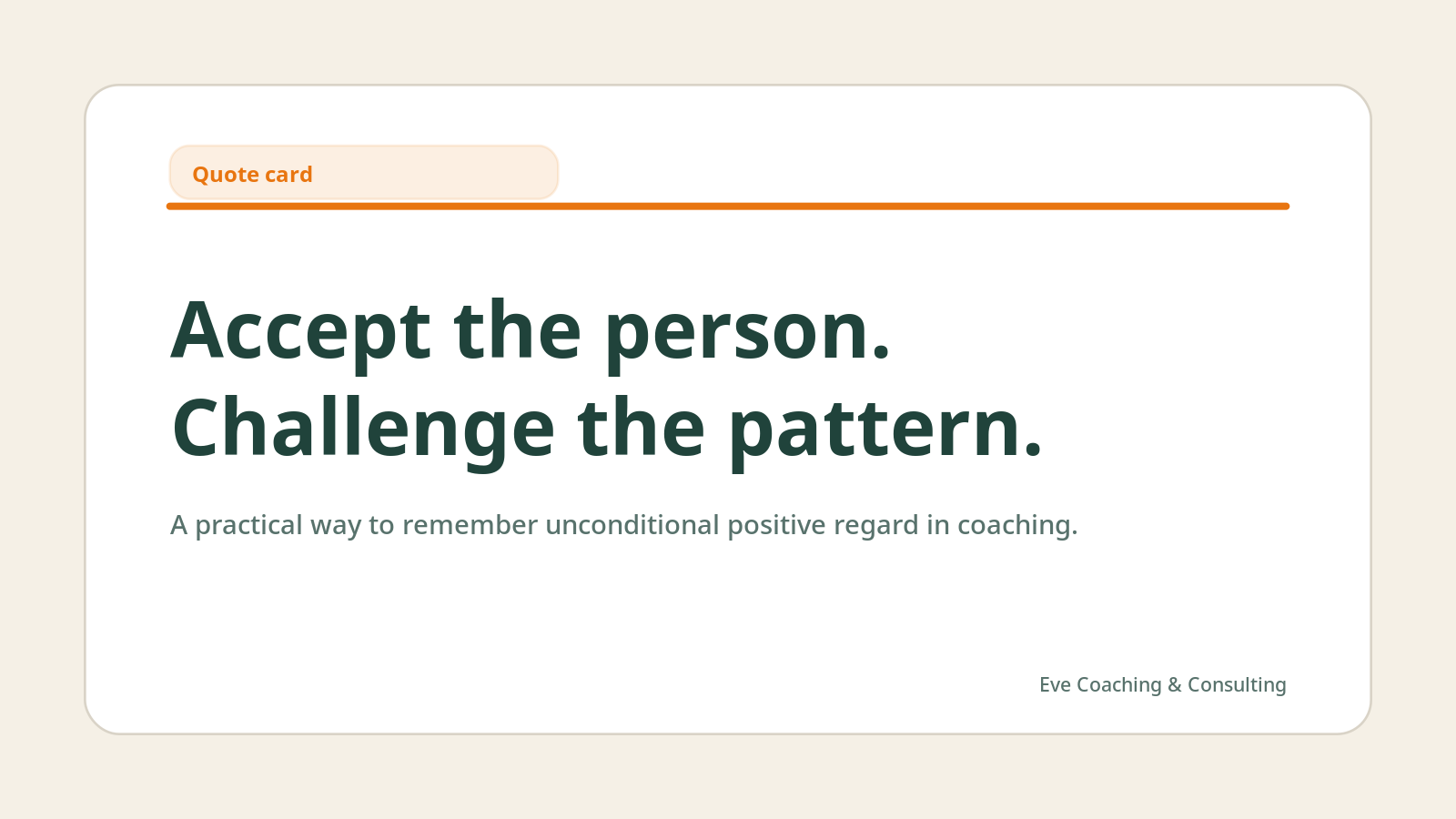
A short coaching principle that captures UPR without turning it into softness.
How to practise UPR without losing edge (a simple checklist)
UPR behaviours that build trust fast
reflect emotion without diagnosing: “I hear disappointment”
ask clean questions, not leading ones
describe behaviour and impact, not character
hold confidentiality and boundaries consistently
be congruent: do not fake warmth
UPR behaviours that destroy trust
premature reassurance (“It’ll be fine”)
moralising (“You shouldn’t feel that”)
rescuing (“Let me fix it for you”)
vague praise (“You’re amazing”)
performative empathy
What this means for leaders in complex, matrix organisations
In a matrix, leaders are constantly dealing with unclear authority, competing priorities, and political cross-pressures. That environment reliably triggers protective behaviour.
UPR helps because it creates a place where leaders can:
say what they are really thinking without reputation damage
examine their part in the system, not just blame the system
test new responses before trying them in high-stakes meetings
If you want a deeper view of the psychology of change in matrix systems take a look here
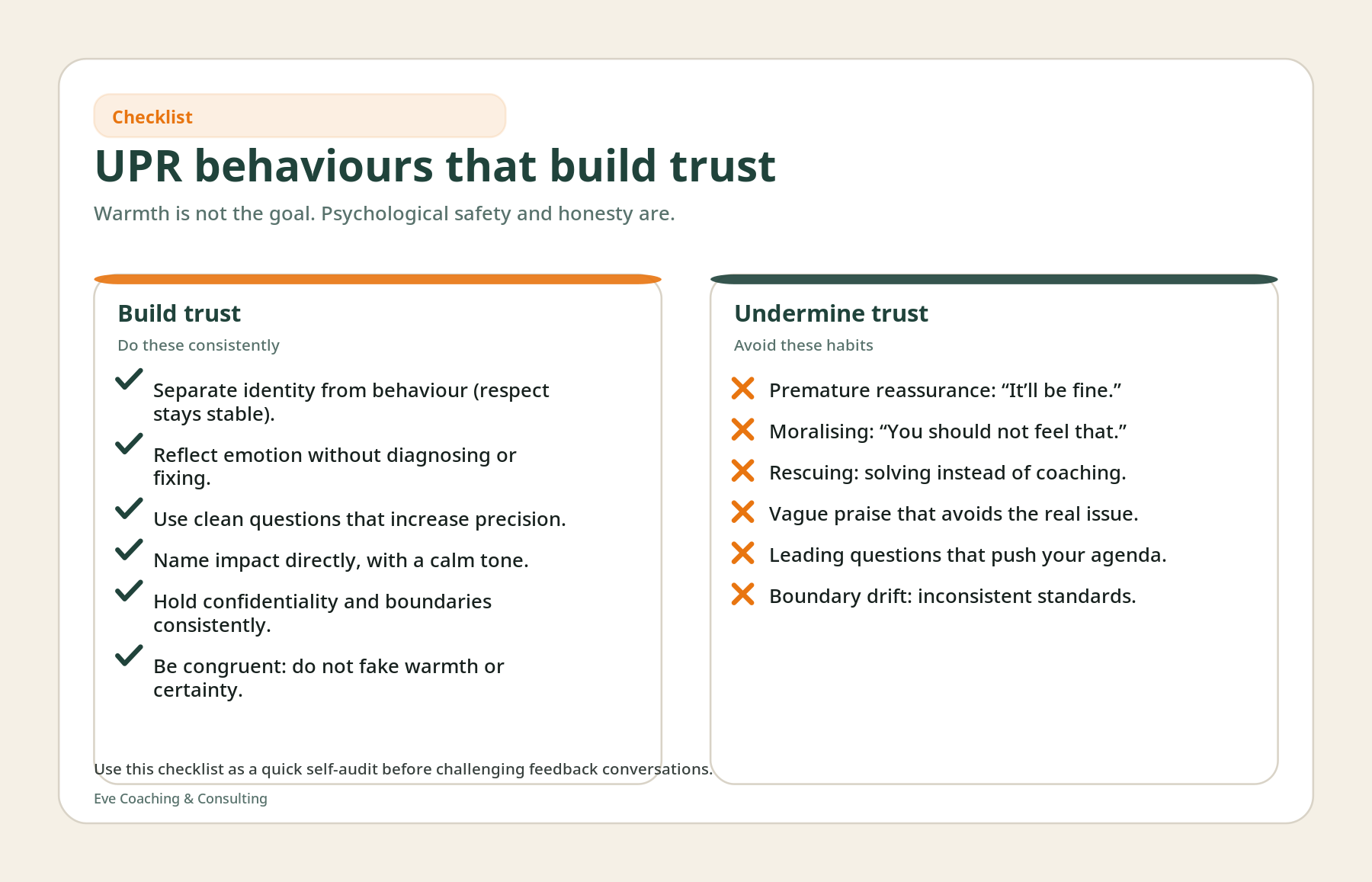
A practical checklist for maintaining UPR without losing edge or boundaries.
If you want to apply this under real board-level pressure, explore executive leadership coaching for senior leaders.
FAQs: Unconditional Positive Regard in Coaching
-
It is a coaching stance of consistent acceptance and respect for the person, without judgement, while still challenging behaviour and choices. It makes honest reflection possible.
-
No. It means you keep respect stable while exploring reality. You can disagree and still offer UPR.
-
It comes from person-centred psychology and is widely treated as a core relational condition that supports trust, openness, and growth. In coaching terms, it strengthens the working alliance, which is one of the most consistent predictors of change.
-
Separate identity from behaviour. Name impact clearly. Hold standards. Keep your tone respectful and your questions precise.
-
Empathy is understanding the client’s internal world. UPR is the acceptance stance you hold while doing that. They work together, but they are not the same.
-
Yes, with boundaries. It does not mean permissiveness. It means you treat people with dignity while holding accountability.
👉 Curious how these insights apply to you?
Let’s explore where coaching could create measurable impact for your organisation.
📞 Book a 30-minute consultation
Take a look at our 1:1 Coaching or Team Development Coaching approaches
📖 Need some clarity? Read the FAQ
📚 My Book Reading list on the themes of change
🎥 Watch the Change Video listings
or select a topic below

Under the Surface
A monthly briefing on the hidden dynamics shaping senior leadership, teams and change…
Read next…